
RECENT PUBLICATIONS

Author(s):
Jennifer A. Ho, Silvia Bonaccio, Catherine E. Connelly, Ian R. Gellatly
Human Resource Management
Although substantial research has been devoted to describing the challenges people with disabilities face in the workplace, much less attention has been focused on the processes that can bring about change. This article explores a proactive process, representative-negotiated idiosyncratic work arrangements (i-deals), that can create the conditions for long-term employment for people with disabilities. Specifically, we explored the factors associated with the development and success of representative-negotiated i-deals for people with disabilities. Using focus groups and interviews with employers and job developers, we identified nine factors and two prevailing conditions that explain the contexts in which representative-negotiated i-deals will be successful. In doing so, we identified the negotiation stage during which these factors and prevailing conditions influence the i-deals negotiation process. Representative-negotiated i-deals offer insights into how employees with disabilities can find more meaningful work. Together, these findings underscore how the representative i-deals negotiation process is only viable if the facilitating factors are present and supported, while the absence of these factors can hinder and lead to failure.
Author(s):
Benjamin Owens, Suzanne Mills, Nathaniel Lewis, Adrian Guta
PLOS ONE
Lesbian, gay, bisexual, transgender, and queer (LGBTQ) individuals experience high rates of adverse mental health outcomes due to the stressors they experience in families, communities, and society more broadly. Work and workplaces have the potential to influence these outcomes given their ability to amplify minority stress, and their ability to influence social and economic wellbeing in this already marginalized population. This study aims to identify how sociodemographic characteristics and characteristics of work, including degree of precarity, industry and perceived workplace support for LGBTQ people, influence self-reported mental health among LGBTQ people in two Canadian cities.
Author(s):
Andrew Stewart, Jim Stanford
Missing Voice? Worker Voice and Social Dialogue in the Platform Economy
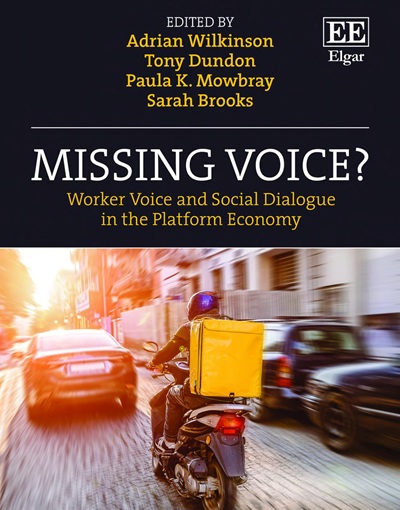
Many platform workers are engaged in activities that are insecure, poorly paid, and often dangerous. But the fragmentation and individualization of their work, reflecting both technology and (in many cases) geography, impede these workers from expressing their opinions, priorities and demands. Making matters worse, the typical classification (or misclassification) of platform workers as contractors often denies them not just basic employment protections, but access to traditional forms of collective organization and bargaining. This chapter focuses on the use of regulation to facilitate collective bargaining or other methods by which platform workers can win a meaningful say over work organization, compensation, and working conditions. The chapter assesses the extent to which existing systems of labour regulation around the world can accommodate representation and collective bargaining for platform workers. It also explores how collective bargaining for self-employed workers may be constrained by competition laws. It reviews examples of actual or proposed reforms to national laws to facilitate representation and collective action by platform workers, as well as the application of current or proposed international labour standards and codes of conduct. The chapter concludes by identifying the most promising priorities for regulatory improvement to support the development of genuine and effective mechanisms of collective voice, representation, and negotiation for platform workers.

Author(s):
Marie L. Radford, Lynn Silipigni Connaway, Abebe Rorissa, Cansu Ekmekcioglu, Nadia Caidi
Proceedings of the Association for Information Science and Technology
This panel features four experts in Library and Information Science (LIS) research who will present findings from major projects conducted during the COVID-19 pandemic from national and international contexts. These include: a) a mixed-methods study of virtual reference services in academic libraries during the pandemic’s beginning, b) semi-structured interviews with 29 global library leaders about library models that emerged in response to changes caused by the pandemic, c) a questionnaire survey of information professionals from the Association of Research Libraries (ARL) regarding linked data technologies, and d) a mixed-methods approach to study newcomers and (mis)information during the pandemic including in depth interviews and content and sentiment analyses of social media platforms. The panelists will describe obstacles and challenges encountered during the pandemic, and efforts to overcame these. They will provide an overview of major findings and share research-based implications for building and maintaining information-resilient societies.

Author(s):
Steve Granger, Brianna Barker Caza, Susan J. Ashford, Erin M. Reid
Journal of Vocational Behavior
Scholarship on stress and resilience at work has repeatedly overlooked professional gig workers despite the rapid growth of this independent workforce. Studying such workers, especially under conditions of global disruption, offers an opportunity to expand theory on the role of personal resources in promoting resilience and well-being in the absence of the contextual resources traditionally offered by organizations. Drawing on the conservation of resources theory (Hobfoll, 1989) and using unique qualitative and quantitative data gathered prior to and during the COVID-19 global pandemic, we investigate the pandemic’s impact on an international sample of professional gig workers and test the relationship between psychosocial resources and workers’ well-being and resilience. Results suggest that workers experienced the pandemic as an environmental jolt (Meyer, 1982) that affected their working lives by shrinking the amount of gig work available, especially for women, and increasing the challenges associated with fluctuating emotions, organizing day-to-day work, and cultivating relationships. Further, we find that pre-pandemic levels of two theoretically informed personal resources—work meaningfulness and the emotional carrying capacity of these workers’ networks—affect outcomes: Work meaningfulness is associated with cognitive and affective well-being, and emotional carrying capacity is associated with social and affective well-being, as well as psychological resilience. Taken together, this research provides novel insights into professional gig workers’ experiences of and reactions to environmental jolts, and the personal resources that aid in their well-being and resilience.

Author(s):
Erin M. Reid, Lakshmi Ramarajan
Organization Science
This study builds theory on how people construct moral careers. Analyzing interviews with 102 journalists, we show how people build moral careers by seeking jobs that allow them to fulfill both the institution’s moral obligations and their own material aims. We theorize a process model that traces three common moral claiming strategies that people use over time: conventional, supplemental, and reoriented. Using these strategies, people accept or alter purity and pollution rules, identify appropriate jobs, and orient themselves to specific audiences for validation of their moral claims. People’s careers are punctuated by reckonings that cause them to reconsider how their strategies fulfill their moral and material aims. Experiences of gender and racial discrimination, access to alternate occupational identities, and timing of entry into the occupation also shape people’s movement between strategies. Over time, people combine these moral claiming strategies in different ways such that varying moral careers emerge within the same occupation. Overall, our study shows how people can build moral careers by actively revising purity and pollution rules while holding fast to institutional moral obligations. By theorizing careers as an ongoing series of moral claiming strategies, this research contributes novel ideas about how morals weave through and organize relationships between people, careers, and institutions.

Author(s):
David Peetz, Sean O’Brady, Johanna Weststar, Amanda Coles, Marian Baird, Rae Cooper, Sara Charlesworth, Amanda Pyman, Susan Ressia, Glenda Strachan, Carolyn Troup
Relations industrielles / Industrial Relations
We studied 14 universities across Canada and Australia to examine how the COVID-19 crisis, mediated through management strategies and conflict over financial control in higher education, influenced workers’ job security and affective outcomes like stress and happiness. The countries differed in their institutional frameworks, their union density, their embeddedness in neoliberalism and their negotiation patterns. Management strategies also differed between universities. Employee outcomes were influenced by differences in union involvement. Labour cost reductions negotiated with unions could improve financial outcomes, but, even in a crisis, management might not be willing to forego absolute control over finance, and it was not the depth of the crisis that shaped management decisions.

Author(s):
Mary Crea-Arsenio, K. Bruce Newbold, Andrea Baumann, Margaret Walton-Roberts
Canadian Ethnic Studies
International migration has increased globally over the past two decades with migrants currently representing 3.5% of the world’s population. As a top destination country, Canada’s immigration policy selects some of the most highly skilled and educated migrants. Yet, upon arrival, many face challenges finding employment that matches their skills and qualifications. Extensive research has emerged that seeks to identify barriers to immigrant employment and the determinants of their success in the labour market. This article presents the results of a narrative review of literature on the employment outcomes of recent immigrants to Canada. A total of 33 articles published between 2010 and 2020 were reviewed. Results indicate both individual and contextual causes for a lag in commensurate employment. Characteristics such as immigration class, education and experience, place of settlement, gender, and visible minority status were identified as significant variables. Changing local labour markets, underemployment and underutilization of immigrant skills and the impact of social networks on attaining employment also emerged as important factors. Canada’s immigration policy is widely perceived as an exemplar model for attracting skilled migrants. However, when compared to countries like Australia and the United States, newcomers to Canada face challenges integrating into employment efficiently and effectively. Findings from this review offer insight for policymakers to improve employment outcomes through innovations adaptable to local labour markets that promote immigrants’ rapid entry into commensurate employment.

Author(s):
Christina Baade
Journal of the American Musicological Society
In the late 1950s, musical variety shows on television played a critical role in the careers of numerous singers, particularly women working in mainstream pop. Some even hosted their own shows, becoming “television personalities,” a new type of performer skilled at conveying televisual authenticity and intimacy. We can better understand the significance of these often overlooked singers by recentering the role of television in their careers. This article takes as its case study the British singer Vera Lynn and Vera Lynn Sings, the lavishly produced, prime-time musical variety show that she hosted from 1956 to 1959 and that was the centerpiece of her exclusive, multi-year contract with the British Broadcasting Corporation. By examining her star persona on the show, the article offers a corrective to accounts of Lynn’s long life as a public figure, which tend to emphasize her fame as a singer in World War II while skimming over her accomplished career in the decades that followed. Drawing upon production documents and scripts at the BBC Written Archives Centre, together with press sources, this article argues that Vera Lynn Sings helped shape popular notions of British national identity in the late 1950s. Through its musical, performative, and visual strategies, the show offered a vision of national belonging that placed aspirational, white, feminine domesticity at the center. Anchored by Lynn’s sincere persona and sentimental songs, the show’s intimate address and musical repertoire welcomed a “family” audience across lines of gender, class, and age, while simultaneously reinforcing racist and colonial definitions of national belonging.
Author(s):
Lucas Dufour, Meena Andiappan, Arnaud Banoun
European Management Journal
This study develops theory related to how the socialization process occurs from the supervisor’s perspective. Using interview data from 102 supervisors, we find that most supervisors simultaneously evaluate (using monitor behaviors) and promote (using inform and support behaviors) newcomers’ fits. Supervisors do so by switching their focus three times: first, from general employability to person–group fit; second, from person–group fit to person–job fit; and third, from person–job fit to person–organization fit. We observed variations in the order in which supervisors evaluated and promoted newcomers’ types of fits. However, we found that supervisors evaluated and promoted newcomers’ fits consistently following the same order in terms of fit paradigms: first adopting a demands–abilities fit paradigm, then a needs–supplies fit paradigm, and finally a value congruence fit paradigm. We contribute to the socialization and fit literatures.

Author(s):
Sachi O’Hoski, Stephanie Chauvin, Brenda Vrkljan, Marla K. Beauchamp
The Gerontologist
Background and Objectives
The World Health Organization’s International Classification of Functioning, Disability and Health (ICF) recognizes participation in life situations as a major component of health. Identifying interventions that target this component is critical, particularly in older adulthood, where declines in physical functioning can impact participation. The purpose of this study was to evaluate the effectiveness of lifestyle or behavior change interventions on the ICF participation domain in older adults.
Research Design and Methods
MEDLINE (Ovid), Embase (Ovid), CINAHL (EBSCO), AgeLine (EBSCO), PsycINFO (Ovid), and AMED (Ovid) were searched from inception to April 2020 for randomized controlled trials comparing the effects of any behavior change or lifestyle intervention to usual care among community-dwelling adults ≥60 years with respect to participation-related domains of the ICF. The protocol was registered with Prospero (CRD42019125334).
Results
Eight studies with a total of 1,548 participants were included. No significant effect on participation outcomes was found (standardized mean difference 0.04; 95% CI −0.19 to 0.26; p = .76) and the quality of evidence was judged to be very low.
Discussion and Implications
Lifestyle or behavior change interventions showed limited effect on participation in later life. However, there remains much uncertainty in the estimate of this effect due, in part, to the low quality of the included studies. Measurement tools that are responsive to changes in participation in older adulthood should be used to determine the effect of such interventions. Improving study design will lead to more efficacious interventions that promote participation for our aging population.
Author(s):
Carolyn Unsworth, Anne Dickerson, Isabelle Gélinas, Priscilla Harries, Isabel Margot-Cattin, Barbara Mazer, Tadhg Stapleton, Lizette Swanepoel, Amanda Timmer, Lana Van Niekerk, Brenda Vrkljan
Ageing & Society
Community mobility using private and public transportation is important for maintaining health, social participation and living well in later life. This international cross-sectional cohort study (N = 246) reported on the health and driving status of older adults from seven countries where the mobility patterns of drivers and non-drivers were compared in terms of city and rural areas, weather, as well as their respective differences in the number of out-of-home places accessed and quality of life. Older adults participated in a semi-structured interview and completed four standardised instruments: the EQ-5D-5L, modified PULSES health profile, modified Transportation Questionnaire, and the Transport – Participation in Activities and Places Outside the Home. Results suggested inclement weather and place of residence negatively impacted out-of-home activities but did not increase use of public transportation. Drivers accessed more out-of-home activities than non-drivers, suggesting higher community participation among this group, and quality of life was generally high among all participants, but slightly higher for drivers. Findings indicate that a complex myriad of factors can influence community mobility in older adults and further investigations are needed to understand patterns of transport in later life, particularly with regard to those factors that promote and maintain transport mobility, and relationships between transport mobility, community participation and quality of life.
Author(s):
Judy Fudge
Global Social Policy
Temporary labour migration programmes (TLMPs) began to grow in the mid-1990s and by 2017 outstripped permanent migration for work (International Labour Organization (ILO), 2017a, 5). TLMPs impose limits on the length of time a migrant is lawfully permitted to be in the receiving country and stipulate the type of work that a migrant can lawfully perform. Typically targeting low-wage workers, TLMPs are frequently seasonal, and they are often circular. Migrant workers admitted under these programmes are regularly denied the same rights as permanent residents or citizens in the host state and they face a range of restrictions relating to access to benefits and services, mobility, residence, employment, and family life (Fudge, 2012). In effect, TLMPs create a hierarchically organized and differentiated supply of migrant workers who are often racialized and gendered (Lewis et al., 2015; Surak, 2013). Since these programmes often tie migrant workers’ right to reside and work in the host state to an on-going employment relationship with a sponsoring employer, employers exercise a great deal of control over migrant workers. TLMPs for low wage workers are associated with severe decent work deficits such as forced labour, wage theft and discrimination (ILO, 2017a: 117).
Author(s):
Trish Ruebottom, Sean Buchanan, Maxim Voronov, Madeline Toubiana
Academy of Management Review
Voyeurism violates dominant moral codes in many societies. Yet, for a number of businesses, including erotic webcam, reality television, slum tourism, and mixed martial arts, voyeurism is an important part of value creation. The success of such businesses that violate dominant moral codes raises questions about value creation that existing theory in management cannot adequately answer. To help advance our understanding, we theorize how businesses commercializing voyeurism create value for audiences. Conceptualizing voyeurism as a social practice, we identify two dimensions of voyeurism—authenticity and transgression—that help create value by generating desirable emotional responses that facilitate a distinctive experience for audiences. However, we further argue that these same dimensions can also hinder value creation by generating undesirable emotional responses that may lead audiences to disengage from the practice. Accordingly, we contend that businesses’ ability to deliver value to audiences hinges on effective emotional optimization—efforts to reduce undesirable emotional responses by dampening the authenticity or transgression in the voyeuristic practice, while reinforcing the associated desirable emotional responses. We contribute to the literature by advancing a novel theory of the commercialization of voyeuristic practice. In doing so, we also enrich our understanding of both authenticity and transgression.

Author(s):
Madeline Toubiana, Trish Ruebottom
Administrative Science Quarterly
Scholars studying stigmatized, or “dirty work,” occupations have tended to characterize people outside of the occupation as the stigmatizers and those within the occupation as social supports who buffer each other from stigma. We argue that this characterization discounts the unique ways stigmatization can take place within heterogeneous occupations and the challenges it raises for finding support from other occupational members. Based on a six-year qualitative study of the sex work occupation in Canada, we explore the internal dynamics of stigmatization in the occupation. Our analysis reveals that sex workers are not just the stigmatized but also the stigmatizers, as they elaborate, borrow, and adapt perceptions of stigma to rank and place each other into a stigma hierarchy. To avoid the risks of being stigmatized based on this hierarchy, sex workers engage in stealth organizing to find safe others within the occupation to provide social support. Thus the occupation is not a stigma-free safe haven for its workers. Instead, the occupation as a whole is characterized by dissension among its members. Their efforts to find social support lead to what we call bounded entitativity: a sense of being grouplike that is confined to small community groups within a broader occupational context of dissension. We found bounded entitativity to be associated with challenges for occupational members in undertaking social change efforts.
Author(s):
Agnes Meershoek, Laura Broek, Mary Crea-Arsenio
Healthcare Policy
The outbreak of the COVID-19 crisis severely afflicted the Dutch long-term care sector. To protect vulnerable residents of nursing homes the government took several measures, of which the complete nationwide visitors’ ban was the most restrictive. These measures had not only a large impact on residents but they also greatly impacted nursing home personnel. Based on a descriptive review and a few interviews, this paper discusses the measures taken in the Dutch long-term care sector and the challenges healthcare personnel encountered in terms of workload and well-being. It further explores the strategies that were implemented to support personnel to cope with these challenges.
Author(s):
Katie Mazer, Suzanne Mills, Séverine Bouard
The Extractive Industries and Society
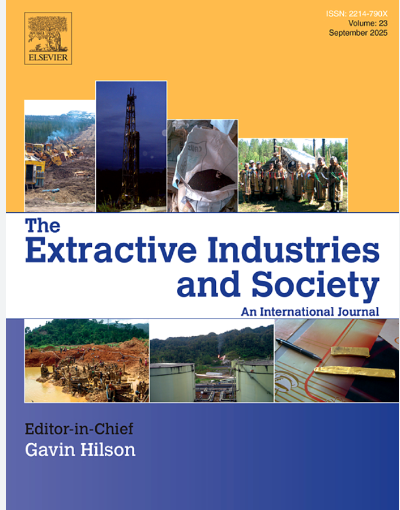
This paper compares Inuit and Kanak women’s participation in nickel mining employment in Canada and New Caledonia through a focused examination of three nickel mines: two in Nunavik, Quebec, Canada and one in the Northern Province of New Caledonia. Since the recent construction of two new nickel refineries, New Caledonia has experienced a dramatic feminization of its mining workforce across traditional mining employment and service-related employment. In Canada, meanwhile, despite targeted efforts by industry and community organizations to facilitate Inuit women’s entry into nickel mining, women’s participation in mining remains relatively low and stagnant. This paper first presents a comparison of employment data at all three mines to illustrate the dramatic divergences in demographic composition of the workforces. Second, drawing on interviews with key informants and historical context, we explore key factors that explain this divergence in Indigenous women’s employment. We argue that Kanak women’s access to mining employment is enabled by, one, the central place of mining in Kanak struggles for self-determination and, two, the daily commuting structure at the mine. In Nunavik, by contrast, limited Inuit control over mining development and the fly-in fly-out employment structure limit Inuit women’s access to mining jobs. Despite these divergences, however, Indigenous women in both contexts face gendered expectations related to social reproduction that pose logistical and social barriers to their long-term participation in the industry.
Author(s):
Jim Stanford
Handbook of Alternative Theories of Political Economy
This chapter considers some of the challenges and pitfalls encountered in achieving stronger engagement by progressive economists in social change movements and campaigns, some best practices to keep in mind in undertaking this collaboration, and examples of ways in which progressive economists have made important contributions to progressive social and political change.

Author(s):
Elisabet Service, Erin DeBorba, Angie Lopez-Cormier, Meliha Horzum, Daniel Pape
Brain Sciences
The ability to accurately repeat meaningless nonwords or lists of spoken digits in correct order have been associated with vocabulary acquisition in both first and second language. Individual differences in these tasks are thought to depend on the phonological loop component of working memory. However, phonological working memory may itself depend on more elementary processes. We asked whether auditory non-verbal short-term memory (STM) for patterns in time supports immediate recall of speech-based sequences. Participants tapped temporal sequences consisting of short and long beeps and repeated nonsense sentences sounding like their native language or an unfamiliar language. As a language learning task, they also memorized familiar-word–foreign-word pairs. Word learning was directly predicted by nonsense sentence repetition accuracy. It was also predicted by temporal pattern STM. However, this association was mediated by performance on the repetition measure. We propose that STM for temporal patterns may reflect a component skill that provides the context signal necessary to encode order in phonological STM. It would be needed to support representation of the prosodic profile of language material, which allows syllables in words and words in sentences to be ordered and temporally grouped for short-term representation and long-term learning.
Author(s):
Jim Stanford
Research in the History of Economic Thought and Methodology
This chapter synthesizes two complementary streams in the economic thought of David M. Gordon, and explores their shared relevance to the rise of the “gig” economy in modern economies. Gordon made lasting contributions to the radical political-economic analysis of work and employment. At the microeconomic level of individual workplaces, he and his collaborators originally explained the factors affecting employers’ labor extraction strategies, through which they seek maximum work effort from waged employees while minimizing unit labor costs. At the macroeconomic or structural level, he linked that conflictual process to the broader institutional and structural features of the overall accumulation regime which is essential to any successful incarnation of capitalism. Employment practices and social structures have evolved considerably since Gordon’s passing, but his insights are still useful in understanding the rise of, and limits to, modern work arrangements. In particular, Gordon’s dual portrayal of the parameters of labor extraction, and their positioning within a broader structural and institutional context, provides a convincing explanation of both the recent rise of gig economy practices, and their potential limits.
Author(s):
Dina Sabie, Cansu Ekmekcioglu, Syed Ishtiaque Ahmed
ACM Transactions on Computer-Human Interaction (TOCHI)
This article presents a thorough discussion of the trajectories of international migration research in HCI. We begin by reporting our survey findings of 282 HCI-related publications about migration from nine digital libraries between 2010–2019, summarizing how this research stream has evolved, the geographies and populations it encompasses, and the methodologies it utilizes. We then augment these findings with data from interviews with 11 skilled researchers who reflect on their working experience in this area. Our analysis reveals how the domain has evolved from the European migrant crisis to a more global agenda of migration and points towards a shifting focus from addressing immediate needs to acknowledging more complex political and emotional aspects of mobility. We also uncover the critical role of academic, local, and international politics in migration research in HCI. We discuss these findings to explore future opportunities in this area and advance HCI research discourse with the marginalized populace.

Author(s):
Paul Glavin, Scott Schieman
Socius: Sociological Research for a Dynamic World
The authors investigate the relationship between platform work engagement and worker mental health on the basis of two nationally representative samples of Canadian workers. Integrating insights from the job demands–resources model and Schor’s idea of “platform dependence,” the authors examine whether a dependent attachment to the platform economy is associated with poorer mental health. Multivariate analyses reveal that dependent platform workers report higher levels of psychological distress than secondary platform workers, wage workers, and the traditional self-employed. In contrast to work conditions, which contribute little to these distress patterns, financial strain explains approximately 50 percent of dependent platform workers’ higher distress. Contingency analyses reveal that financial strain also exacerbates the mental health penalties associated with dependent platform work. These findings support a “dependent-precarity” perspective of platform work stress, raising questions about the future health challenges posed by platform work in a postpandemic economy.

Author(s):
Judy Fudge
London Review of International Law
Although the UN calls on governments to end modern slavery, Walk Free, a private foundation connected to the faith-based abolitionist movement, leads the private-public network to eliminate slavery from transnational supply chains. Examining the network’s governance techniques reveals how scale and governance are reconfiguring sovereignty beyond the territory of the nation state and aligning it with neoliberal governmentality.
Author(s):
Abel Chikanda
Global Migration, Gender, and Health Professional Credentials: Transnational Value Transfers and Losses
This chapter examines the role played by migration intermediaries in the global movement of health professionals. It provides a descriptive account of the operation of migration intermediaries, particularly those that connect professionals from the Global South with the Global North. In addition, it shows how the implementation of the various codes of practice have forced migration intermediaries to reorganize their operations in an effort to comply with the new migration governance system.